- Xuất bản vào
What We See Is Not The Truth
- Tác giả

- Name
- Dat Nguyen
What We See Is Not The Truth
Everything we see, even with our own eyes, may not be THE TRUTH. Let's do a fun experiment together!
The Experiment
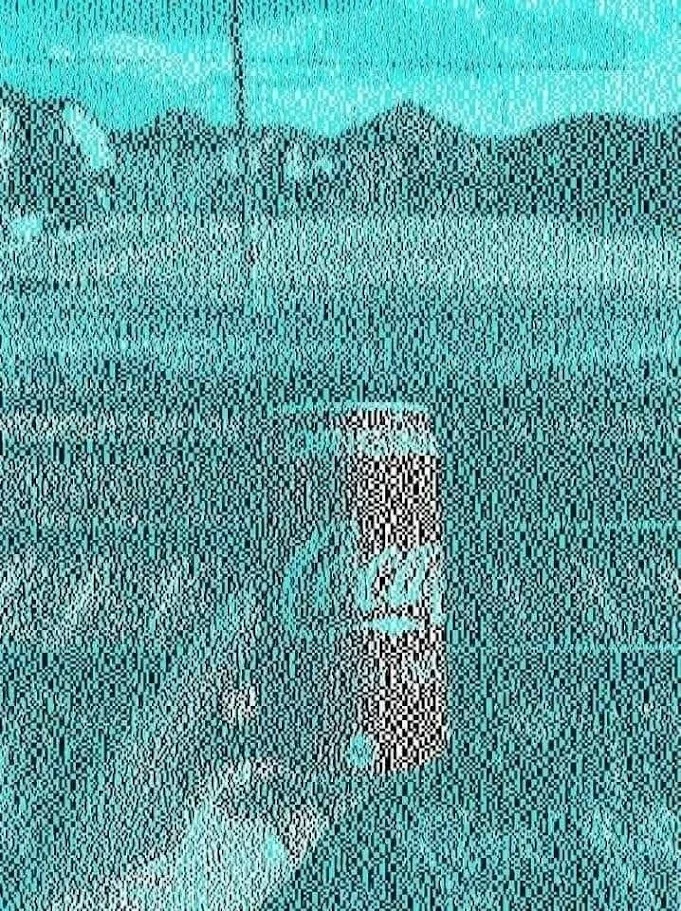
Let's try a small experience together. First, take a few seconds to observe the image below and answer the question:
"What color is the Coca-Cola can?"
.
.
Please answer the question before reading further ✅
.
.
.
.
.
.
Your Answer?
- "Red, easy as pie, why even ask!"
- "I'm 100% sure it's red, I've seen it... 3 thousand times!"
- "Only color blind people would say it's not red!"
Everyone says red, but wait, in this modern age, let's ask AI to be sure 😉
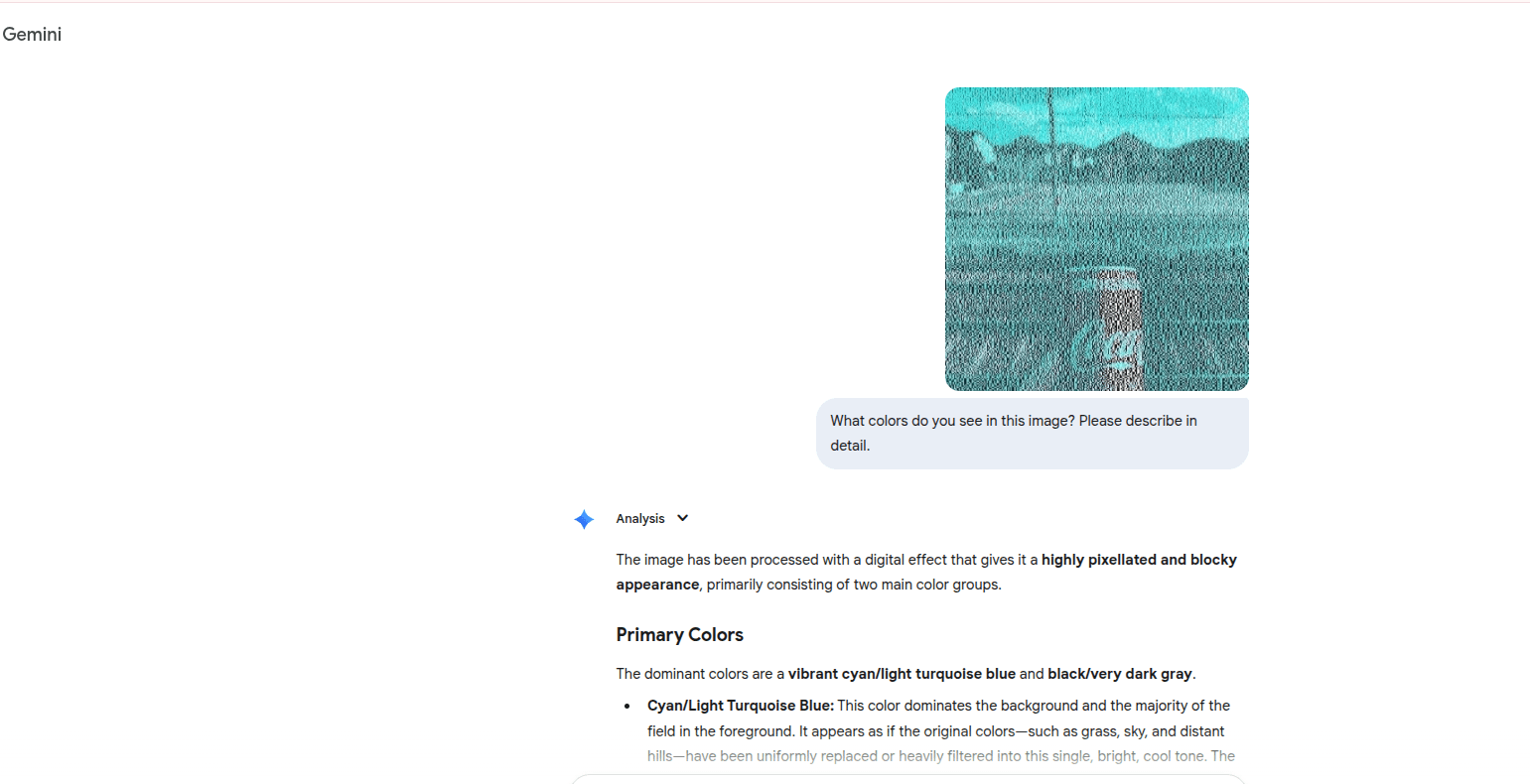
Here's what Gemini AI detected:
The image has been processed with a digital effect that gives it a highly pixellated and blocky appearance, primarily consisting of two main color groups.
Primary Colors
The dominant colors are a vibrant cyan/light turquoise blue and black/very dark gray.
Cyan/Light Turquoise Blue: This color dominates the background and the majority of the field in the foreground. It appears as if the original colors—such as grass, sky, and distant hills—have been uniformly replaced or heavily filtered into this single, bright, cool tone. The high saturation and brightness make it the most prominent color in the image.
Black/Very Dark Gray: This color forms the internal structure of the central object (a beverage can) and makes up some of the darkest pixels in the background, suggesting shadows or original dark elements. It provides a stark, high-contrast separation from the cyan.
Central Object Detail
The central object, which appears to be an aluminum beverage can, is defined by a high-contrast checkerboard pattern of the cyan/light blue and black/dark gray.
The can's body is primarily composed of these alternating pixels, which create a white or light-gray illusion from a distance, but upon closer inspection, it's just the two main colors.
The logo/text on the can is clearly visible as a blocky pattern of the black/dark gray pixels, standing out against the lighter pattern that forms the can's main body.
In summary, despite the image's high level of digital noise and blockiness, the color palette is extremely limited, consisting almost entirely of a vivid cyan/light turquoise blue and black/very dark gray.
The Truth Revealed
Oh! So Google AI is color blind? The truth is AI answered completely accurately.
We can verify this by covering part of the image with our hand, or zooming in on the photo so we can no longer see the complete can. At this point, the "original" colors will be "revealed in their true form". The image below is a zoomed-in portion of the photo:
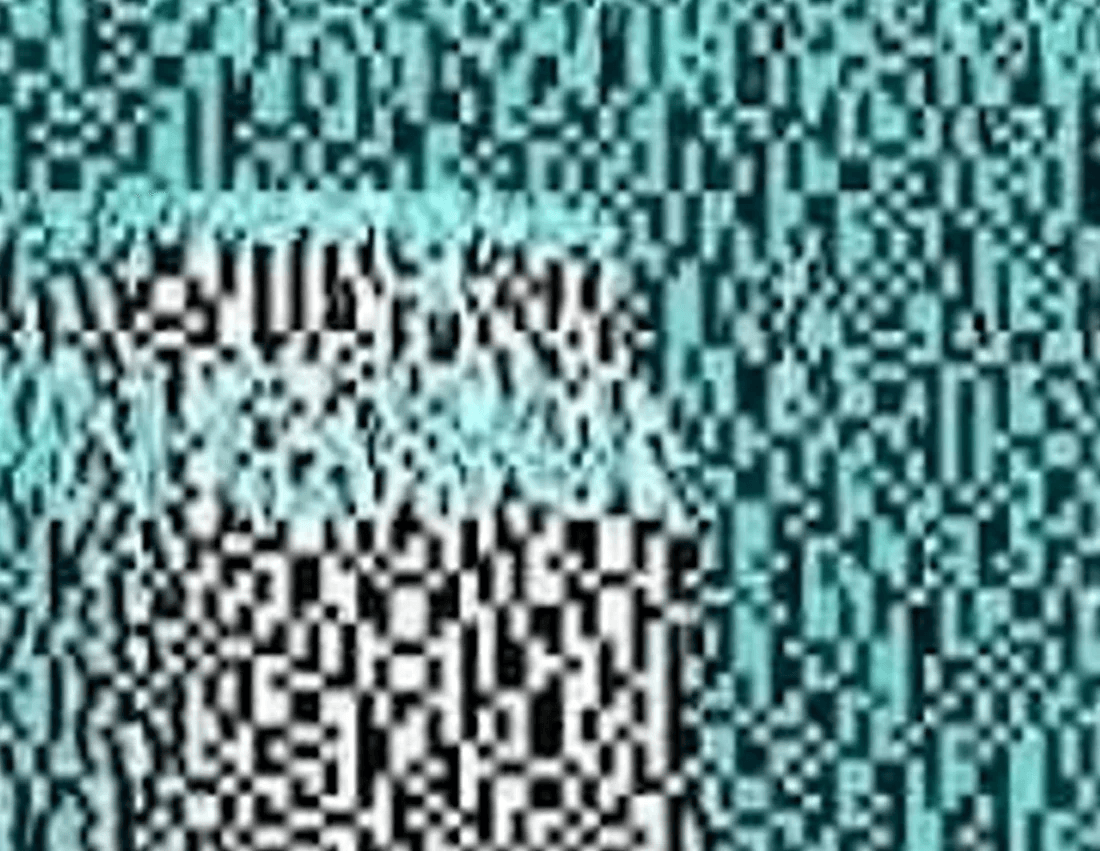
Looking at this close-up, we can clearly see it's only "cyan/turquoise blue + black/dark gray" pixels. What appears as "white" or "light gray" from a distance is actually just a checkerboard pattern of these two colors creating an optical illusion—exactly as Gemini AI accurately described!
So who's really color blind here? 😊
Explanation
The truth is, when looking at the full version of the Coca-Cola can, our brain automatically "colored" it based on our own life experiences.
From childhood to adulthood, 99.9% of us will see red Coca-Cola cans, and this becomes a "bias" in most of our thinking. So when we look at an image shaped like a Coca-Cola can like the example above, this bias has a huge influence, causing us to conclude that the can is red (like what we've seen/experienced many times in the past).
The NLP Communication Model
From a mind science perspective, this can be explained by The NLP Communication Model:
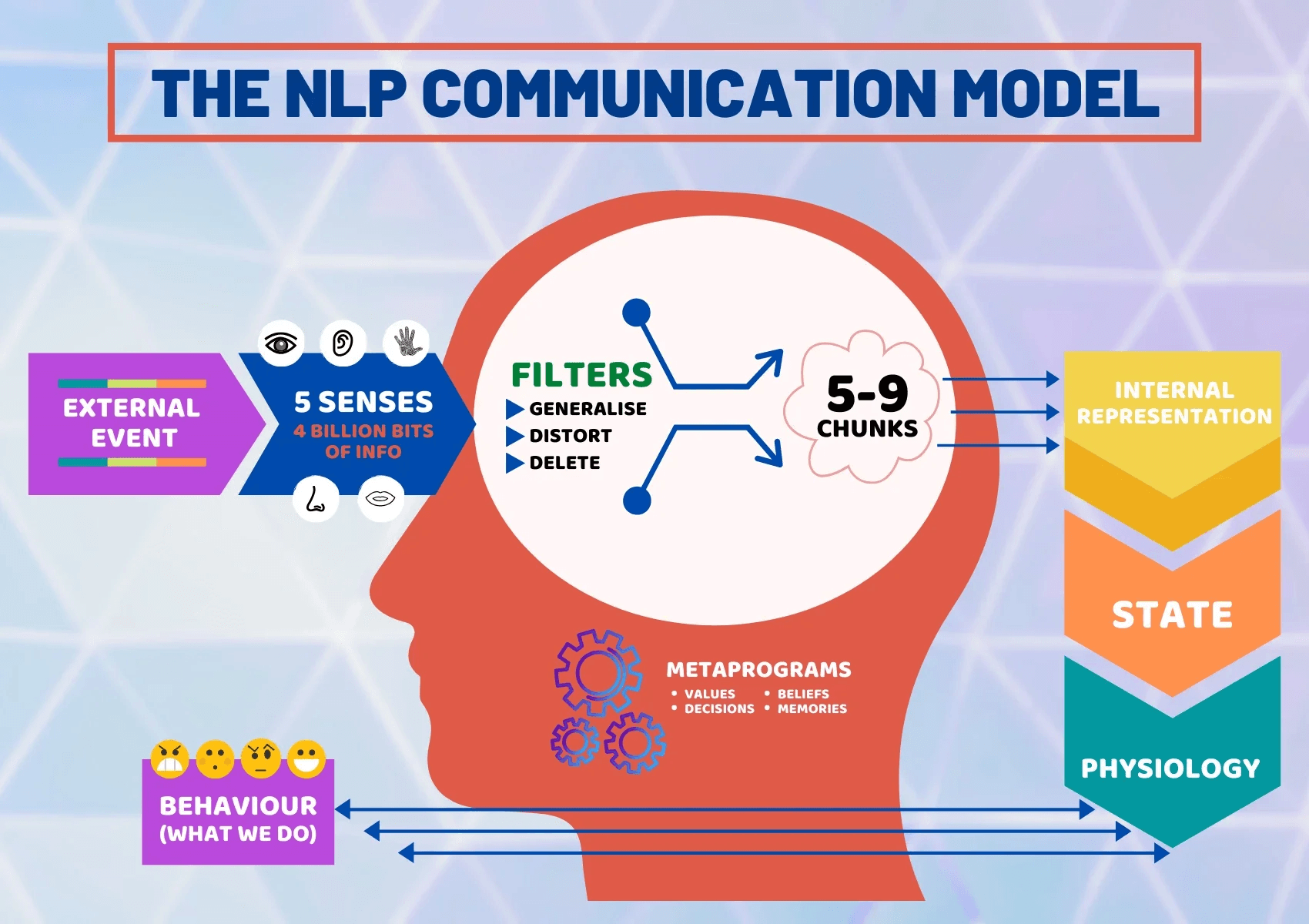
According to this model, when humans receive external information through the 5 senses, it must pass through 3 filters:
- Delete - Ignore unimportant information
- Distort - Change information to fit current beliefs
- Generalise - Generalize based on past experiences
From the input information, these filters will create a new version of information that fits our current understanding and beliefs.
Therefore, what we actually register in the end has a very high probability of no longer resembling the original information, and we often call it subjective information.
Returning to the Coca-Cola image above, the white color information that our eyes initially registered was completely distorted, and when it reached our conscious mind, it had become red.
Practice
Through this very simple example, we can see the danger of subjective reality in evaluating/perceiving events.
Only through continuous mental training, through various paths (Dao) of practice, can we minimize and eliminate similar biases, moving towards what is called Right View (in the Noble Eightfold Path).
The Path of Practice
Choosing a suitable practice method for yourself and persistently practicing will be the key to opening the path toward awakened wisdom.
In the ☘️ Mindful Journey ☘️ community, we are trying to create more content to diversify different practice methods. Join us on this journey!
Connection & Growth
- New connections are continuously being formed...
- New seeds are continuously being planted...
- Individual consciousness grows larger day by day.
☘️ Mindful Journey ☘️ - where you will find yourself!